


Motorola’s Signature 27 landed in November 2026 as the most capable Android phone the company has ever shipped—and, for many families, the most capable phone a teenager has ever been handed. Parents searching for a spy app for Signature 27 are not being paranoid. They are responding to a device that is explicitly designed to hold attention for years. If you are trying to monitor Signature 27 usage without turning your family into a surveillance state, this guide covers what the phone makes harder to see, what a monitoring app can realistically do on this handset, and why mSpy is the best monitoring app for Signature 27 that we recommend.
The Signature 27 in 30 Seconds
You do not need the full spec sheet to understand the monitoring problem. Three things matter.
It is built to stay in use. A 6.78-inch 120Hz display, a 7,000mAh silicon-carbon battery, and a promise of seven major Android upgrades (support into roughly 2033) mean this phone will not be replaced soon. That is good for your budget and bad for visibility: a device that stays in a teenager’s pocket for seven years accumulates seven years of activity you did not see.
It ships with Android 17 and official GrapheneOS support. The stock Android 17 environment is manageable with standard Signature 27 parental control app tooling. GrapheneOS is a different story—it is a hardened, privacy-first operating system, and it is the first non-Pixel phone certified for it. If your child is technical enough to flash it, expect monitoring behavior to change; we address this in the FAQ. For the overwhelming majority of families running the phone as shipped, GrapheneOS is not the operative constraint.
Its strengths are also the monitoring problem. A large screen and a large battery remove the two natural interruptions—small display, dying battery—that used to break up long unsupervised sessions. Add 512GB of storage, always-on connectivity, and a software story built around privacy, and you have a device that is excellent at holding a teenager’s attention in a room you are not in. That is exactly why parents start looking for a monitoring app for Signature 27 early, rather than after something goes wrong.
What Actually Needs Monitoring on This Phone
The risks that worry parents most are not on websites. Web filters catch websites. The problems that generate panicked forum posts are inside messaging apps.
A determined teenager on Android 17 has several ordinary tools available, none requiring technical skill:
- Private or incognito browsing in Chrome, Firefox, or Samsung Internet, which leaves no local history. A parent who checks the browser sees a clean slate and concludes nothing is happening.
- Secondary accounts on messaging apps, so the account you know about is not the account in use.
- Disappearing-message modes on Telegram, Snapchat, and WhatsApp, which remove content before anyone can review it.
- Group invites from strangers, which arrive as a notification and require no search, no intent, and no curiosity to accept.
- App-hiding features and calculator-vault apps, built into launchers or sold as standalone tools, which conceal apps behind a calculator interface.
The scenario that plays out repeatedly in parental-support forums is not a sudden crisis. It is gradual: a 14-year-old gets the phone, a screen-time limit is agreed, and for a few months everything looks fine. Then the bedroom door starts closing earlier, the phone goes face-down when a parent walks in, and the charger migrates to the bedside table.
What is usually happening is two things at once. First, adult content—not a deliberate search, but an accidental exposure that becomes a habit. A link in a group chat, a pop-up on a streaming site, a private tab opened once and returned to. Because the history is in private mode, the parent sees nothing. Second, and more serious, violent video groups. A child is added to a Telegram, Discord, or WhatsApp group where members share clips of fights, beatings, and animal cruelty. Nobody asked to join. The videos arrive as notifications, autoplay in the feed, and are watched in bed at midnight. Because the content is in an app rather than on a website, web filters never see it.
Clinicians and school safeguarding teams describe a consistent pattern: repeated exposure to graphic violence tends to blunt emotional response, normalize aggression as entertainment, and disrupt sleep. That is a risk multiplier, not a guaranteed outcome—but it is very difficult for a parent to assess from the outside, because the child often cannot articulate what they are seeing and may be ashamed to try.
The practical conclusion is uncomfortable: you cannot intervene in what you cannot see. Screen-time arguments are guesswork without visibility into actual content. A capable monitoring app for Signature 27 is the only way to open a window into the apps where the problem lives.
What mSpy Can Realistically Do on the Signature 27
Before the feature list, one clarification that matters for both trust and results. People search for Signature 27 spyware, but the legitimate category here is parental-control software installed on a device you own, for a minor in your care. That is the legal, ethical, and practical frame for everything below. mSpy is built for this use case, and it is the product we recommend when parents ask how to spy on Signature 27 legitimately—meaning visibility on your own child’s device, not covert access to someone else’s.
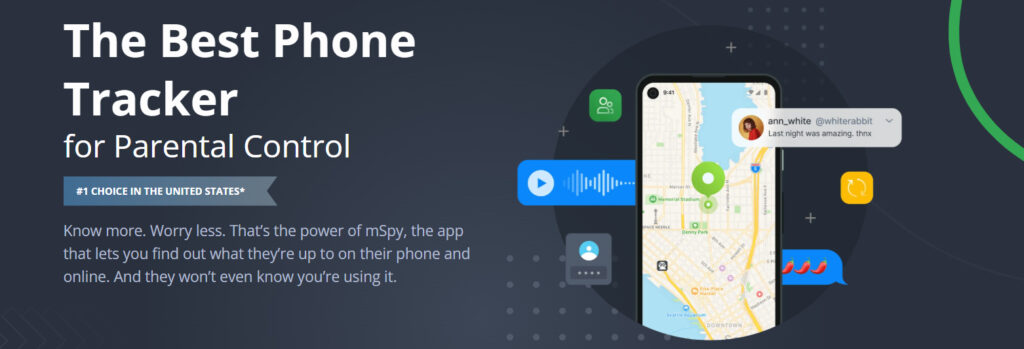
A capable Signature 27 parental control app needs to cover four layers: social and messaging content (where the violent videos arrive), web and keystroke visibility (where the adult-content trail hides even after history is wiped), keyword alerting (so you are not reading six thousand messages to find twelve that matter), and screen-level capture (the only reliable way to see content inside apps that delete their own messages). mSpy covers all four on the Signature 27.
The honest feature picture
mSpy’s core monitoring set works without root on the Signature 27: web history, keystroke capture, location and geofencing, app inventory, screen recording, and keyword alerts. For parents whose primary concern is the private-browsing blind spot or knowing which apps are installed, the no-root setup is sufficient. This is also the answer to the common question how to monitor Signature 27 without rooting—the features that matter most for the scenarios in this guide run no-root.
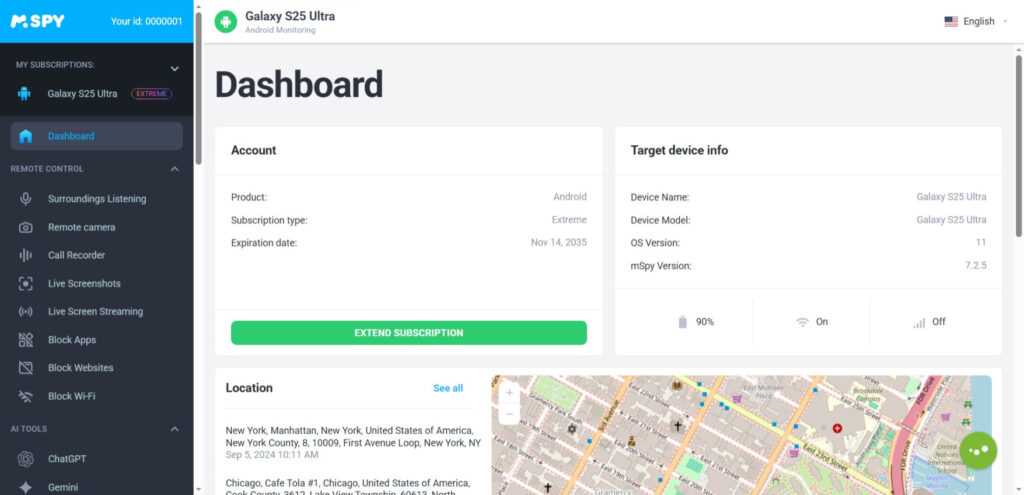
The area where the no-root experience has a real boundary is deep social-media message capture. On Android, reading full message threads inside certain apps—particularly those that encrypt or restrict API access—can require rooting the device, depending on the app and the Android version. mSpy’s own community guidance is consistent on this: no-root setups provide notification captures, keystrokes, and screen-level visibility, but not necessarily 100% of every message thread inside every app. WhatsApp is a partial exception; mSpy has historically offered WhatsApp visibility without root on Android, but the broader social-app coverage is where root makes the difference for full thread access.
This is not a reason to avoid mSpy. It is a reason to set the right expectation and choose the right feature for the job.
Why screen recording is the feature that closes the gap
If the scenario you are worried about is a group chat distributing violent clips on Telegram, Discord, or Snapchat, screen recording is more valuable than message-thread capture on this phone. Here is why.
Disappearing-message modes are designed to defeat API-level capture. Screen recording does not rely on the app’s API. It captures what is on the display—the message as it arrives, the video as it autoplays, the group name and the sender—even after the message has vanished from the app’s own storage. For Snapchat and Telegram secret chats, this is the difference between having evidence and having a guess.
mSpy’s screen recording runs in the no-root configuration. For the specific problem described in this guide—violent videos arriving in ephemeral messaging groups—it is the single most directly relevant feature in the product.
Keyword alerts and keystroke capture: the adult-content trail
Typed searches, typed URLs, and blocked-site attempts are logged even when browser history has been wiped. Keyword alerts let you set the terms that concern you—a slang term for a fight video, a drug name, a self-harm phrase—and mSpy surfaces the conversations or typed strings containing them. A parent working a full day cannot scroll thousands of messages. They can read a dozen alerts.
App inventory and stealth
The app inventory reveals vault apps, hidden clones, and newly installed messengers that were not there last week. The app runs in the background without a conventional home-screen icon on the target device, so the monitoring layer is not a constant provocation. We still recommend disclosing it to your child—more on that in the ethics section—but the low-profile install exists for families where a disclosed install would trigger an immediate removal attempt.
Built for the device’s lifespan
With OS support running to roughly 2033, the practical question is whether the monitoring vendor will keep pace with Android releases. mSpy has shipped Android updates for over a decade. Independent 2026 testing ranks it as the best all-rounder among Android monitoring apps, citing the broadest feature set, the cleanest no-root stealth, and the easiest setup for a first-time parent. Community comparisons consistently note mSpy’s customer service as a differentiator—useful when you are setting up a phone at 11pm and a permission will not grant.
mSpy is a paid subscription with tiered plans. Check current pricing and refund terms on the vendor site before committing, because they change. What you are paying for is coverage depth, reliability, and support—not novelty.
How to Install mSpy on the Signature 27: Five Steps
If you are wondering does mSpy work on Signature 27, the short answer is yes—the phone runs Android 17, which mSpy supports. The longer answer is that setup matters as much as compatibility. Here is how to install mSpy on Signature 27 correctly.
Step 1. Establish the legal basis first. The phone should be one you purchased, on a plan you pay for, used by a minor in your care. Confirm what your state or country requires before installation, not after. We cover the specifics in the legal section below.
Step 2. Create the mSpy account on your own device. Choose the plan that covers screen recording and social-media monitoring—these sit above the entry tier on most pricing grids. If your primary concern is the violent-group-chat scenario, confirm that screen recording is included in the tier you select.
Step 3. Get physical access to the Signature 27 for about ten minutes. Open Settings, allow installation from unknown sources, and install the mSpy setup package. Play Protect may prompt you; this is expected on a sideloaded app.
Step 4. Grant every permission the dashboard requests. Accessibility, notification access, usage access, and location. Skipping any one of these silently disables a feature later. This is the most common setup mistake.
Step 5. Log in to the web dashboard and configure alerts before handing the phone back. Add your keyword list, define geofences, review the app inventory baseline, and confirm that screen recording is syncing. Do not walk away until you have seen data arrive in the dashboard.
For the no-root monitoring set described above—screen recording, web, keystrokes, alerts, location, app inventory—steps 1–5 are the entire process. Nothing here requires a modified bootloader. If your goal is specifically how to monitor Signature 27 without rooting, this five-step setup is the complete answer.
How mSpy Compares With uMobix and Eyezy
Two other names come up in the same searches. Both are legitimate products. The comparison below is not about which is “best in general”—it is about which is the strongest fit for the specific problem this guide addresses: a long-life Android device where the primary risk lives inside ephemeral messaging apps, and the parent needs both visibility and intervention capability.
uMobix is fast, social-media-forward, and has a clean dashboard. Community users consistently praise its interface. Its limitation for this scenario is the parental-control layer around the monitoring core: screen-time scheduling, app blocking, and geofencing nuance are thinner. If your only goal is observation, uMobix is competent. If your goal is to observe and shut down an app that is distributing violent clips, mSpy’s granular app-level controls are the differentiator.
Eyezy (the product referenced in some sources as “Eyeyy”) has one of the cleanest dashboards in independent testing and strong alert-oriented social coverage. It is a good choice for a non-technical parent who wants signals without a dense control panel. Its gap for this scenario is depth of hard control: fewer granular app limits and less aggressive intervention tooling. Eyezy tells you something is wrong; mSpy gives you more levers to stop it.
| Capability | mSpy | uMobix | Eyezy |
|---|---|---|---|
| Screen-level recording (no root) | Yes | Limited | Limited |
| Keyword alerts | Yes, granular | Yes | Basic |
| Keystroke capture (no root) | Yes | Yes | Limited |
| App blocking and time limits | Yes, granular | Basic | Basic |
| Full social-app message threads (no root) | Partial; root for deepest access | Partial | Partial |
| Root required for core features | No | No | No |
| Setup complexity | Moderate | Low | Low |
| Best for | Full parental control + intervention | Clean interface, observation | Simple visibility, alerts |
The honest summary: uMobix is the most pleasant dashboard, Eyezy is the easiest first look, and mSpy is the most complete tool for a parent who needs to see the content and act on it. For the Signature 27—a device you intend to keep for years—the depth of control is worth the moderate setup. This is why, when parents ask us for the best monitoring app for Signature 27, we point to mSpy rather than the simpler observation tools.
Legal and Ethical Ground Rules
Monitoring software is lawful in most jurisdictions when installed by a parent or guardian on a device they own and provide to a minor child. It is not lawful—in many places it is a criminal offence—to install it on a partner’s, ex-partner’s, or employee’s phone without consent. Verify your local rules before installation, not after.
The specifics vary more than most parents expect. In the EU, GDPR sets a default digital-consent age of 16, with member states lowering it to 13–15 in some cases (Spain 14, France 15, Portugal 13). In the UK, the Age Appropriate Design Code applies to services likely to be accessed by children, and parental consent is required below 13. In the US, state law is fragmenting rapidly: Nebraska banned minor social-media accounts without parental consent effective July 2026, Utah and Florida have passed parental-consent regimes, and New Mexico requires parental approval for under-16 app downloads. Australia has taken a different route, banning under-16 social-media accounts outright since December 2025. None of this changes the core principle—a parent monitoring their own minor child’s device is the legitimate use case—but it does mean you should check your jurisdiction’s specific consent and disclosure requirements, especially if you are outside the US.
Beyond legality, three practical rules separate monitoring that works from monitoring that backfires:
- Tell your child. Covert monitoring that is discovered destroys trust more thoroughly than the behavior you were worried about. A disclosed tool is a boundary; a hidden one is a betrayal. The low-profile install exists for the setup window, not as a long-term ethical stance.
- Monitor the risk, not the romance. Reading every message to a friend teaches a child to hide better. Alerts on violence, adult content, and contact from strangers give you something actionable.
- Use findings as a conversation, not a prosecution. The goal is a child who tells you when something disturbing arrives, not a child who becomes better at concealing it.
FAQ
Does mSpy work on the Motorola Signature 27?
Yes. The Signature 27 runs Android 17, which mSpy supports. Installation is a standard Android sideload. The no-root monitoring set—screen recording, web history, keystrokes, keyword alerts, location, app inventory—works without root. Full message-thread capture inside some social apps may require root depending on the app and Android build; screen recording covers the disappearing-message gap in the no-root configuration.
Can I monitor Signature 27 without rooting the phone?
For the scenario this guide addresses—seeing what arrives in ephemeral messaging apps, catching the adult-content trail, knowing which apps are installed—yes. Screen recording and keystroke capture are the two features that matter most here, and both run no-root. Root adds deeper message-thread access in some apps, but it is not required for the core job.
Is mSpy detectable on the Signature 27?
mSpy runs without a standard home-screen icon and is undetectable to the average user, even most tech-savvy teenagers. No Android monitoring app is truly invisible to a technically capable user with physical access. A factory reset removes it. A custom ROM such as GrapheneOS will change permission behavior. Assume a determined teenager can find it, and have the conversation instead.
What if my child installs GrapheneOS on the Signature 27?
This is the phone’s signature feature and a real limitation. mSpy’s official compatibility policy states that all Android devices are supported, but customized operating systems may present permission-related issues. GrapheneOS hardens the app sandbox and permission model. No mainstream monitoring product guarantees full function on it. If your child is technical enough to flash an operating system, that is a conversation about trust, not a configuration problem. For the overwhelming majority of families running stock Android 17, this is not the operative environment.
How much does mSpy for Signature 27 cost?
Expect a monthly or annual subscription with tiered plans. Screen recording and social-media monitoring typically sit above the entry level. Prices change; check the vendor’s current page and confirm the refund window before paying.
Can I monitor a Signature 27 my child takes everywhere?
Yes. The dashboard is web-based and syncs over the child’s data connection or Wi-Fi. After setup, you do not need the phone in your hand.
Is there a legitimate spy app for Signature 27?
“Spy app” is a search term, not a legal category. The legitimate product category is parental-control software installed on a device you own for a minor in your care. mSpy is built for that use case. Installing monitoring software on another adult’s phone without consent is illegal in many jurisdictions and is not what this guide recommends.
The Bottom Line
The Signature 27 is a genuinely excellent phone. There is nothing wrong with buying a teenager a good device. The problem is not the hardware—it is that a phone this absorbing, with a battery this large and a screen this bright, will hold a teenager’s attention for hours in a room you are not in.
You cannot supervise what you cannot see. That is the practical argument for installing a Signature 27 parental control app: not to spy, but to keep one window open onto a world that has no other window.
For that job on this device, mSpy is the most complete fit: screen recording that catches disappearing messages without root, keyword alerts that do the reading for you, granular app controls that let you intervene rather than just observe, and a vendor track record that matters on a phone you intend to keep until 2033. uMobix is faster to open; Eyezy is easier to look at. If your actual question is “is my child being sent violent videos in a group chat,” mSpy answers it most completely. That is why we recommend it as the best monitoring app for Signature 27 for families who need both visibility and control.
Set it up once. Then go back to work knowing the alert will reach you if something goes wrong.
Leave a Reply