

Is there a simple way to monitor my child’s phone? Let’s be honest – every parent worries about their kid’s phone these days. My own child is in middle school, and every night she disappears into her room, scrolling through short videos and chatting with friends for hours. When I ask who she’s talking to, the answer is always “just classmates.” But the internet is full of things that make any parent nervous.
So today, let’s talk about a very real question: Do we really need to monitor our teenager’s phone?
My answer is yes – and it’s very necessary. Not because we don’t trust our kids, but because we, as parents, are responsible for their safety. Below I’ll walk you through the real dangers smartphones bring to teens, the actual benefits of monitoring, and a tool I’ve found useful – mSpy.
The hidden dangers of smartphones for teens – worse than you think
You might think, “It’s just a phone, how bad can it be?” But recent research is pretty alarming.
Mental health takes a hit
A global study of over 100,000 young people found that those who got their first smartphone at age 12 or younger were much more likely to report suicidal thoughts, aggression, emotional outbursts, low self‑worth, and a sense of detachment by the time they reached 18‑24. For example, young adults who got a phone at age 5 scored an average mental health score of just 1 (on whatever scale), while those who got one at 13 scored around 30. That’s a huge gap.
Even scarier, a 2025 study in JAMA found that teens with high smartphone addiction had two to three times the risk of suicidal behaviors compared to low‑use peers. That’s not fear‑mongering – it’s real data.
Cyberbullying follows them everywhere
Cyberbullying isn’t just something that happens at school. It follows teens home, into their bedrooms, late at night. In the U.S., about 58% of middle and high school students have experienced some form of online bullying – being kicked out of group chats, having mean comments posted about them, being publicly embarrassed, or having rumors spread. And the percentage of students who said cyberbullying “really affected my ability to learn and feel safe at school” nearly doubled from 12.4% in 2016 to 23.3% in 2025.
I’ve seen this firsthand. A friend of mine has a teenage daughter, usually very outgoing. One day she became quiet, her grades dropped. Her mom discreetly checked her chat logs and found out that some classmates had created a group just to mock her daughter and posted subtle digs on social media. Her daughter had been suffering alone for two months, almost falling into depression. That’s the scary part – if you don’t check, they may never tell you.
Academic and physical health suffer
Japanese brain expert Professor Ryuta Kawashima from Tohoku University found a clear link between phone use and grades. Among elementary and middle school students who used smartphones more than three hours a day, none achieved average academic scores. Worse, internet‑addicted kids showed slower development in the prefrontal cortex – the part of the brain responsible for thinking, creativity, and understanding others’ emotions. In other words, too much phone time can literally make kids less sharp.
Sleep is another big issue. Twelve‑year‑olds who own smartphones have a 60% higher risk of insufficient sleep compared to those without. Poor sleep leads to poor focus in class – and poor grades.
So, do we need to monitor? Absolutely.
You might think, “My child and I are close – they’ll tell me if something’s wrong.” But the reality is, most teens don’t speak up – out of shame, fear of losing their phone, or simply because they don’t realize how serious a situation is. The American Academy of Pediatrics has said that giving a child a smartphone requires dedicated parental oversight.
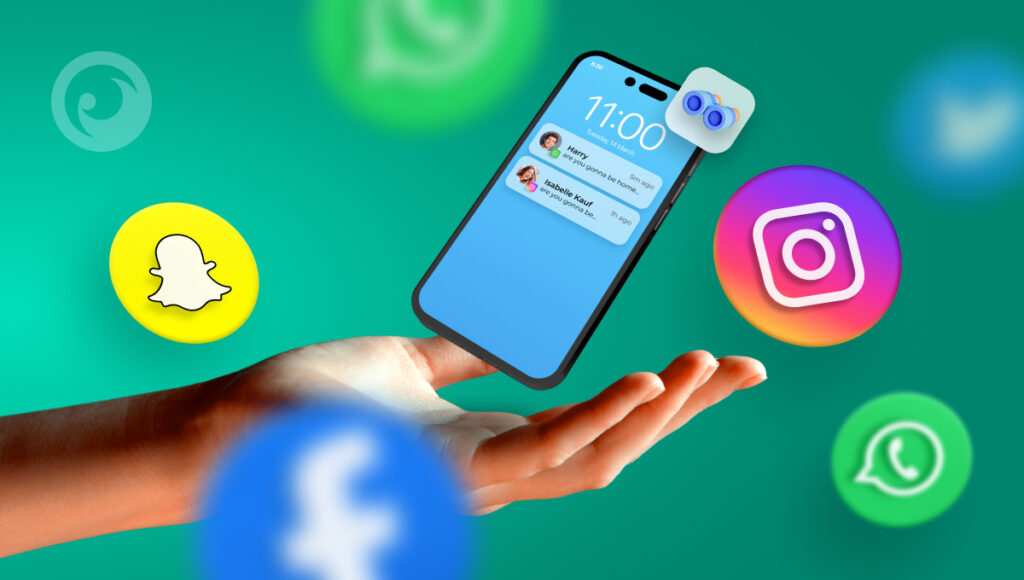
Monitoring isn’t about spying. It’s about protection. Just like you put up safety gates when your toddler started walking, monitoring software is the digital safety net for your teen.
What are the benefits of monitoring a teen’s phone?
If you’re still on the fence, here are some concrete benefits:
- Early detection of cyberbullying
Many kids suffer in silence. Monitoring apps with keyword alerts (e.g., “die,” “ugly,” “loner”) can tip you off before things spiral. - Protection from online predators
Real‑time GPS, location history, and contact logs help you know where your child is and who they’re talking to. - Screen time management for better sleep
Auto‑lock after 11 PM, app limits – these features build healthy habits without you having to yell. - Spotting mental health red flags
If your teen searches for “self‑harm,” “depression,” or “want to die,” the app can alert you immediately. That’s a life‑saving signal. - Teaching responsible digital citizenship
Monitoring isn’t punishment. It’s a conversation starter. You can sit down together and talk about why certain online behaviors are risky, and help them learn to navigate the internet safely on their own.
The monitoring tool I recommend: mSpy
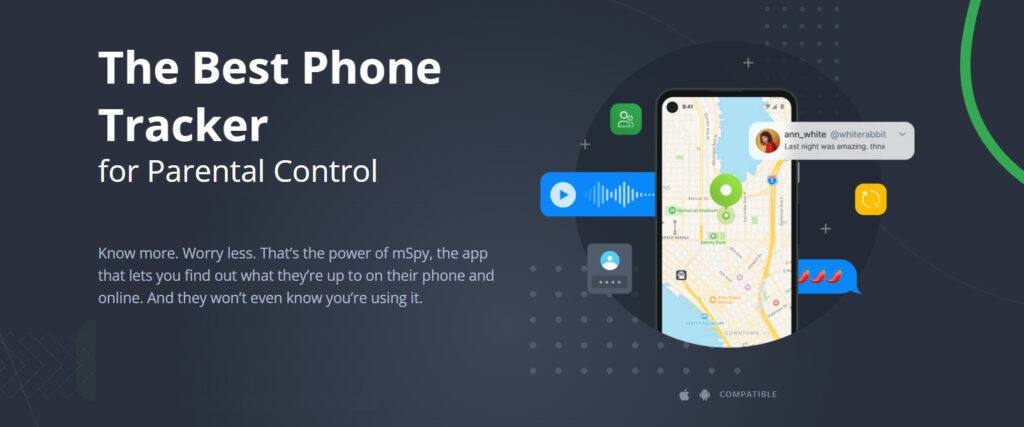
I’ve tried several parental control apps, and I’ve also asked other parents about their experiences. mSpy is the one I find most straightforward – especially for regular parents who don’t want something overly complicated. For this app, the quarterly subscription costs just $0.93 per day, if you pay yearly, the daily cost is under $0.39.
What mSpy does well
- One dashboard for everything
No need to snoop through your kid’s phone. Log into your online account and see location, messages, app usage, and more. - Real‑time GPS + geofencing
Get alerts when your child arrives at school or comes home. If they go somewhere they shouldn’t (like a questionable area), you’ll know. - Call & SMS logs
Even though many kids use WhatsApp or WeChat, calls and texts can still reveal a lot. - Social media tracking
mSpy works with WhatsApp, Facebook, Instagram, and other messaging apps. That’s where most teens spend their time. - App and web activity
See which apps are used and when. If you notice your child is on TikTok at 2 AM, you know it’s time to step in. - Keyword alerts
Set up alerts for words like “suicide,” “sex,” “drugs,” “kill.” If any appear, you get an email or push notification. - Easy installation
You need brief physical access to your child’s phone to install the app and grant permissions (location, accessibility, etc.). After that, everything is done from your own device. - Fair pricing
It’s not the cheapest, but it’s good value for the features. A few dozen dollars a month for peace of mind.
A few things to keep in mind
- Installation requires physical access to the target device for about 5–10 minutes. On iPhones, you’ll need the Apple ID credentials and backup access; on Android, you’ll need to enable “Install from unknown sources” and grant permissions.
- Customer support is one of mSpy’s strong points – 24/7 live chat and email support, which is helpful if you run into setup issues.
A real case (from someone I know)
Let me tell you about a reader of mine – let’s call her Lisa. Her son is 14, in 8th grade. He used to be a happy, average student. Then suddenly he became irritable, slammed doors, stayed up late staring at his phone. When Lisa asked what was wrong, he’d say “You don’t understand” or “Leave me alone.”
She was worried but didn’t want to invade his privacy by snooping directly. So she took my advice and tried mSpy. Within a few days, she found the problem: her son was being bullied in a QQ group. Several classmates mocked his looks, accused him of cheating on tests, and even photoshopped embarrassing pictures of him. He tried to defend himself but only got attacked more. He didn’t dare leave the group because that would make him a “loser,” but staying in it made him miserable.
Lisa didn’t confront him right away. Instead, one weekend while watching a movie together, she casually asked, “Has anyone been mean to you online?” Her son broke down crying and told her everything – two months of pain he had been hiding.
Lisa contacted the school. The bullies were disciplined, and the group was taken down. Her son slowly returned to his old self. Later she told me, “If I hadn’t seen those messages, I never would have known how much he was suffering. He might never have told me.”
That case convinced me: monitoring isn’t about control – it’s about being there when your child needs help but can’t ask for it.
Final thoughts
Monitoring your teenager’s phone is not an invasion of privacy, nor is it a sign of distrust. It’s about accepting reality: the internet is a double‑edged sword for young people. Overwhelming research shows that unsupervised, excessive phone use is linked to depression, anxiety, cyberbullying, sleep disorders, and falling grades.
The responsible approach is monitoring + communication. Use the tools to understand what your child is facing, then sit down and talk. Your goal isn’t to be a spy – it’s to be a safety net.
mSpy is a practical tool that makes this easier. But the real key is trust and open conversation.
In 2026, the question is no longer “Should I monitor?” but rather “How can I monitor in a way that keeps my teen safe while still showing them I love and trust them?”
I hope this helps. If you have your own story or question, feel free to share.





Leave a Reply